FETAL POSITION
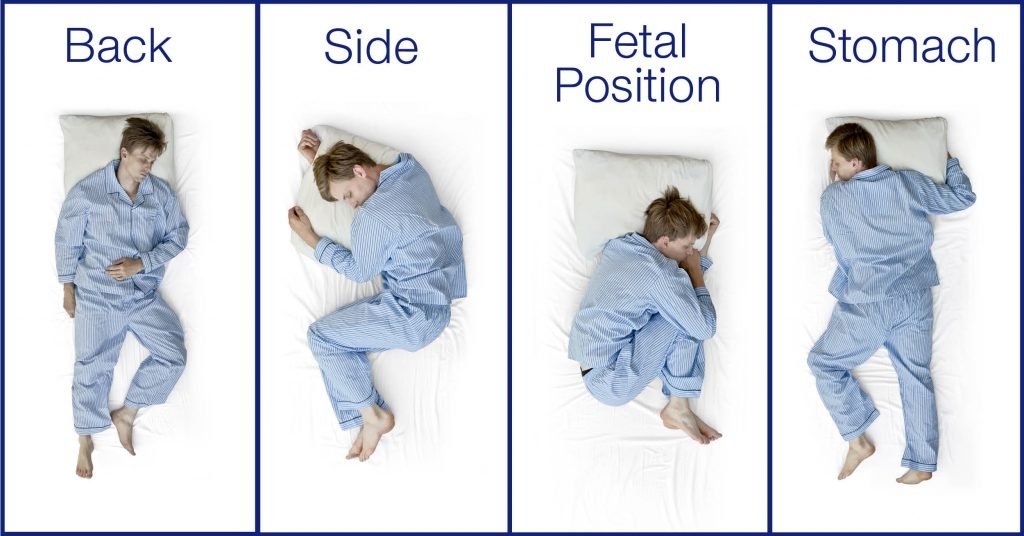
This is the most popular sleep position. Not only is it great for lower back pain or pregnancy, sleeping in the fetal position can help reduce snoring.
Unfortunately, sleeping in the fetal position does have a few downsides. If your position is not loose, it may limit deep breathing while you snooze. Also, if you have any issues with joint pain or stiffness, sleeping in a tight fetal position might leave you sore in the morning.
SLEEPING ON YOUR SIDE
Sleeping on your side, especially the left side is very good for you. Not only can it help reduce snoring, it’s great for your digestion and might even reduce heartburn.
However, it does come with its own drawbacks. Not only can it cause stiffness in your shoulders, it can also lead to jaw tightness on that side. Plus, research suggests that sleeping on your side could contribute to wrinkles.
Putting a pillow between your lower legs will help better align your hips to avoid low back pain.
Therefore, make sure to choose a good pillow to avoid neck and back pain. Sleep on whichever side feels most comfortable, but don’t be afraid to switch to a different position if it’s not working for you.
LYING ON YOUR STOMACH
This position is good if you snore or have sleep apnea ,however, the benefits don’t extend much further. Sleeping on your stomach can cause both neck and back pain. It can also add a lot of unnecessary strain to your muscles and joints, which is why you might be waking up sore and tired.
You can try sleeping with a thin head pillow — or no pillow — to reduce any added stress on your neck. You can also try slipping a pillow under your pelvis to reduce lower back pain.
FLAT ON YOUR BACK
This sleep postion offers the most health benefits. It protects your spine and relieves hip and knee pain. This position uses gravity to keep your body in an even alignment over your spine, which can help reduce any unnecessary pressure on your back or joints. A pillow behind your knees may help support the natural curve of the back. It also protects you from getting any pillow or gravity-induced wrinkles.
However, sleeping on your back can be difficult for anyone who struggles with snoring or sleep apnea. It can also be difficult for anyone who already struggles with back pain, which is why it’s important to make sure you’re properly supported.