FAQ’s
FAQ
FAQ
9965
wp-singular,page-template,page-template-full_width,page-template-full_width-php,page,page-id-9965,wp-theme-bridge,wp-child-theme-bridge-child,bridge-core-2.5.2,ajax_fade,page_not_loaded,,qode_grid_1300,qode-child-theme-ver-1.0.0,qode-theme-ver-23.7,qode-theme-bridge,disabled_footer_top,wpb-js-composer js-comp-ver-8.7.2,vc_responsive

FAQ’s

OMR-SS-SleepDeprivation-Graphics_HowMuchSleep-912x1024-min

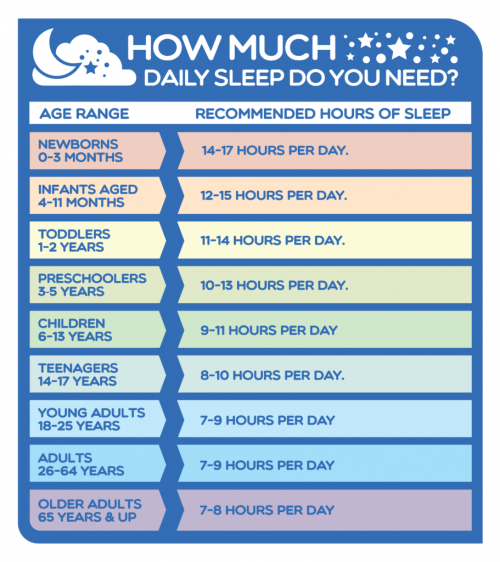
How much daily sleep do you need?


Age Range Recommended hours of sleep
New Borns
0-3 Months
14-17 hours per day
Infants Aged
4-11 Months
12-15 hours per day
Toddlers
1-2 Years
11-14 hours per day
Preschoolers
3-5 Years
10-13 hours per day
Children
6-13 Years
9-11 hours per day
Teenagers
14-17 Years
8-10 hours per day
Young Adults
18-25 Years
7-9 hours per day
Adults
26-64 Years
7-9 hours per day
Older Adults
65 Years & Up
7-8 hours per day

WHY DO WE NEED SLEEP?

Sleep allows your body and mind to recharge, and leaves you refreshed and alert. A Healthy sleep helps your body to remain healthy and disease free. If you do not get enough sleep your brain cannot function properly. This can impair your abilities to concentrate, think clearly, and process memories. Work schedules, day-to-day stresses, a disruptive bedroom environment, and medical conditions can all prevent you from receiving enough sleep.

HOW MUCH SLEEP DO HUMANS NEED?

The right amount of sleep largely depends on your age.

The Importance of Getting Enough Sleep


For those who do not receive a sufficient amount of sleep each night can implement some positive lifestyle and sleep habits in order to log the needed seven to nine hours.

These include the following:

  • Establish a realistic bedtime and stick to it every night, even on the weekends.
  • Maintain comfortable temperature settings and low light levels in your bedroom.
  • Consider a “screen ban” on televisions, computers and tablets, cell phones, and other electronic devices in your bedroom.
  • Abstain from caffeine, alcohol, and large meals in the hours leading up to bedtime.
  • Refrain from using tobacco at any time of day or night.
  • Exercise during the day; this can help you wind down in the evening and prepare for sleep.

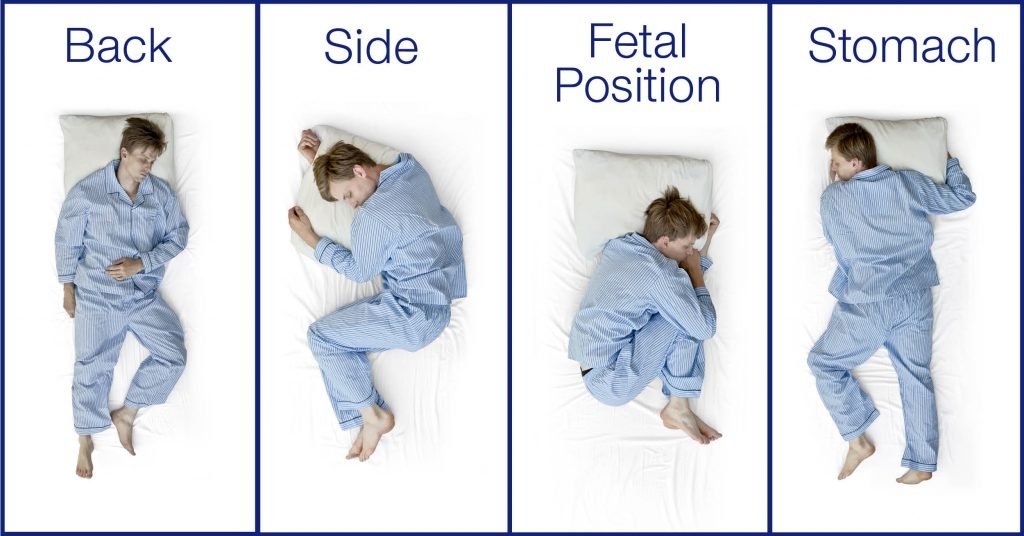
Best sleep positions


Your sleep position plays a big role in your sleep quality. Different sleep positions have different benefits.Taking the time to gradually train yourself to sleep in a new position could be the secret to improving your sleep quality. You can also try modifying your favorite sleep position to make sure you’re getting the most out of it.

Every individual is different. What’s important is that you’re doing what works for your body and your sleep needs.

FETAL POSITION

This is the most popular sleep position. Not only is it great for lower back pain or pregnancy, sleeping in the fetal position can help reduce snoring.

Unfortunately, sleeping in the fetal position does have a few downsides. If your position is not loose, it may limit deep breathing while you snooze. Also, if you have any issues with joint pain or stiffness, sleeping in a tight fetal position might leave you sore in the morning.

SLEEPING ON YOUR SIDE

Sleeping on your side, especially the left side is very good for you. Not only can it help reduce snoring, it’s great for your digestion and might even reduce heartburn.

However, it does come with its own drawbacks. Not only can it cause stiffness in your shoulders, it can also lead to jaw tightness on that side. Plus, research suggests that sleeping on your side could contribute to wrinkles.

Putting a pillow between your lower legs will help better align your hips to avoid low back pain.

Therefore, make sure to choose a good pillow to avoid neck and back pain. Sleep on whichever side feels most comfortable, but don’t be afraid to switch to a different position if it’s not working for you.

LYING ON YOUR STOMACH

This position is good if you snore or have sleep apnea ,however, the benefits don’t extend much further. Sleeping on your stomach can cause both neck and back pain. It can also add a lot of unnecessary strain to your muscles and joints, which is why you might be waking up sore and tired.

You can try sleeping with a thin head pillow — or no pillow — to reduce any added stress on your neck. You can also try slipping a pillow under your pelvis to reduce lower back pain.

FLAT ON YOUR BACK

This sleep postion offers the most health benefits. It protects your spine and relieves hip and knee pain. This position uses gravity to keep your body in an even alignment over your spine, which can help reduce any unnecessary pressure on your back or joints. A pillow behind your knees may help support the natural curve of the back. It also protects you from getting any pillow or gravity-induced wrinkles.

However, sleeping on your back can be difficult for anyone who struggles with snoring or sleep apnea. It can also be difficult for anyone who already struggles with back pain, which is why it’s important to make sure you’re properly supported.